The Vestibule Contains Organs of Hearing and Equilibrium.
The cochlear duct forms a shelf across the cochlea dividing it into two sections the scala vestibuli and the scala tympani. The vestibule contains organs of hearing and equilibrium.
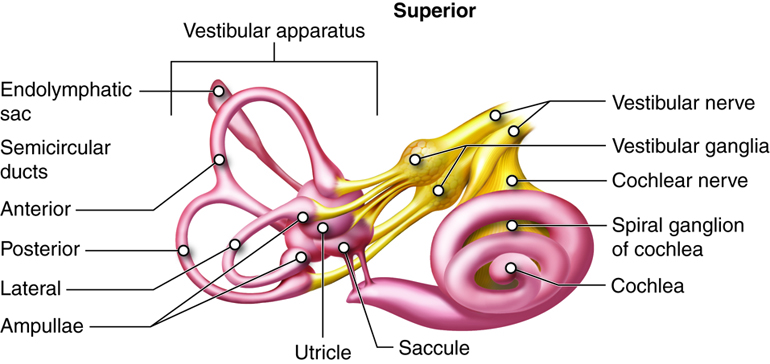
Hearing And Equilibrium Anatomy And Physiology
Within the bony labyrinth the vestibule and the semicircular canals- compromise the vestibular apparatus b.
/vestibule-of-the-ear-anatomy-5096174.FINAL-d0203061afd64f559cae4929c8af9fb1.jpg)
. The ear is subdivided into 3 major parts. The middle ear consists of a fluid filled chamber. Along with hearing the inner ear is responsible for encoding information about equilibrium the sense of balance which it does in the vestibule and semicircular canals structures that are sometimes collectively referred to as the vestibular apparatus Fig.
Each organ contains a crista sensory hair cells and a cupula as found in the ampullae of the semicircular ducts. Equilibrium is the sense of balance and positional awareness. Is associated with static equilibrium.
A state of emotional balance or calmness It took me. Contains maculae which have hair cells embedded into a. Vestibular labyrinth contains 5 receptor organs Utricle saccule detect linear accelerations produced by gravity and resulting from body motions 3 semicircular canals detect a ngular accelerations caused by head body rotation superior.
Mobile PDFOptimized for tablets 55 x 85 Printable PDFOptimized for printing 85 x 11. Which structure allows upper respiratory infections to spread from the throat to the tympanic cavity. The external ear middle ear and internal ear.
Hearing and second is the maintaining the balance of head. The cristae respond to waterborne vibrations and to pressure changes. The vestibule contains organs of hearing and equilibrium.
Contains the bony labyrinth which holds sensory organs for equilibrium and hearing i. The utricle and saccule respond to acceleration in a straight line such as gravity. Within the bony labyrinth is a membranous labyrinth which is also divided into three parts.
The organ of hearing is the cochlea. Hearing is the transduction of sound waves into a neural signal that relies on the structures of the ear. Has chambers with patches of specialized epithelium called maculae.
One may also ask which part of the ear detects acceleration and equilibrium. And the cochlear duct which is the only part of the inner ear involved in hearing. The cornea belongs to the tunica fibrosa fibrous layer of the eyeball.
A tumor located in this canal will potentially interfere with the special sense s of. Can be divided into the utricle and saccule. The facial nerve cranial nerve VII and vestibulocochlear nerve cranial nerve VIII both travel through the facial canal of the petrous portion of the temporal bone.
Transduction begins with an action potential in a sensory receptor. The ears aid in detecting and processing sound and help maintain an overall equilibrium of the being. FALSE The vestibule only contains organs of equilibrium.
Several types of sensory receptors provide information to the brain for the maintenance of. The ear is the organ of both hearing and equilibrium. Cochlea Latin for snail shell- central hearing apparatus c.
When you travel in an elevator the ___ senses when the elevator is moving. Two saclike structures the saccule and utricle located in the vestibule. Inner ear is not accessible to direct examination but functions can be assessed 5.
Consists of cavities called bony labyrinth. The incus articulates with which bones. The anatomists of the 17th and 18th centuries assumed that the entire inner ear including the vestibular apparatus is devoted to hearing.
Contains sense organs for hearing and equilibrium. The vestibule contains organs of hearing and equilibrium. Second for equilibrium the vestibule and semicircular canals have receptors.
Infrasonic frequencies below ___ Hz are not detected by the ear whereas ultrasonic frequencies above ___ Hz are inaudible vibrations. For hearing the organ of corti of cochlea has receptor hair cells. There are five vestibular receptor organs in the inner ear the vestibular labyrinth.
The middle ear contains the actual organs of hearing the cochlea and equilibrium the vestibular apparatus conducts sound waves through a canal toward the tympanic membrane carries and amplifies the vibrations of sound waves across three little bones Submit Request Answer malleus vestibular nerve incus vestibule cochlea cochlear nerve. The vestibule contains an otolith organ named utricle and another known as saccule. The middle ear consists of a fluid-filled chamber.
They were impressed by the orientation of the. The utricle the saccule and three semicircular canals. A state in which opposing forces or actions are balanced so that one is not stronger or greater than the other Supply and demand were in equilibrium.
A pathology affecting the vestibular system usually results in a loss of control over the balance and equilibrium of the body. The vestibule of the ear is mainly related to the control of equilibrium and balance of your body. The ear is the organ that helps in hearing which is the modification of sound waves from any source into neural signals that the brain could process.
A small fluid-filled sac under the utricle in the vestibular system that responds to static positions of the head. The following events takes place for hearing process-The pinna allows the sound waves into the auditory canal. Receptors for two sensory modalities hearing and equilibrium are housed in the ear.
Contained within the bony labyrinth which contain the fluids and sense organs of hearing and balance.
Vestibule Of The Ear Anatomy Function And Treatment
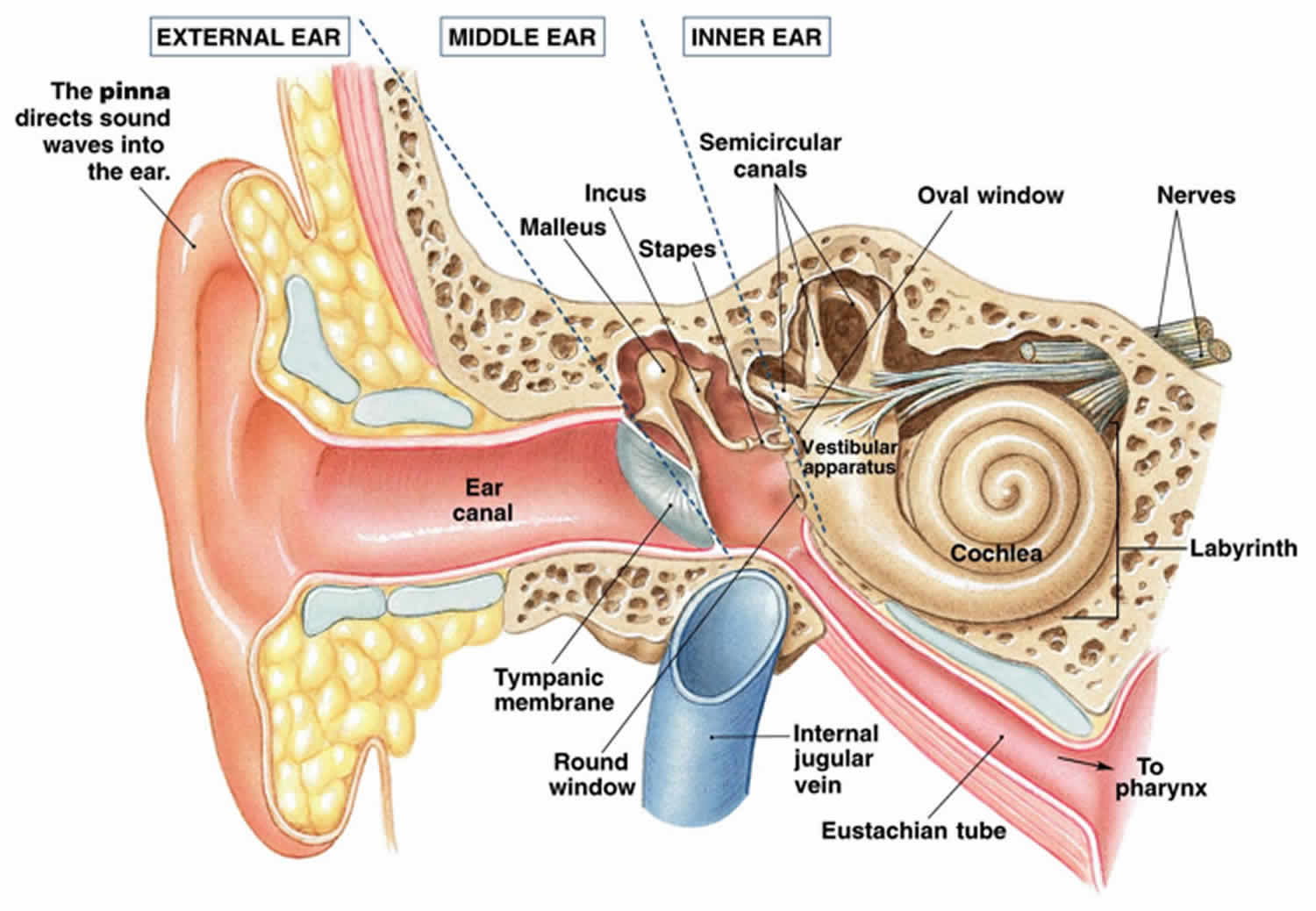
Vestibular System Anatomy Function Vestibular System Disorders
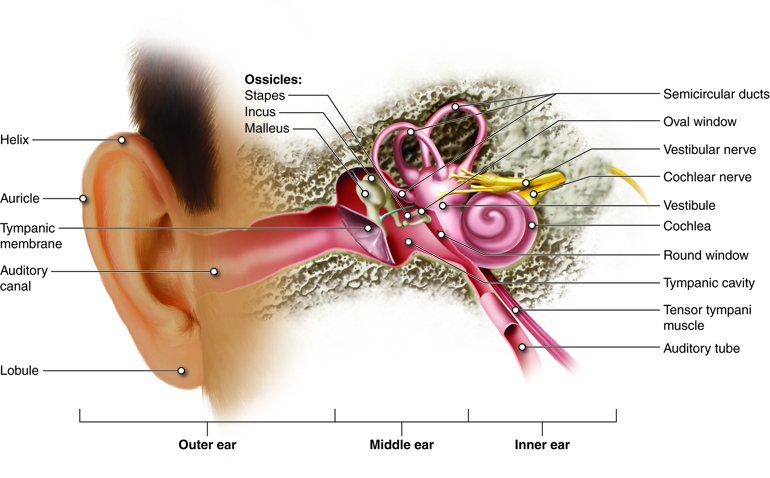
Hearing And Equilibrium Anatomy And Physiology


Comments
Post a Comment